As natural or previously coloured hair is lightened, underlying warm pigment becomes visible. Understanding that predictable warmth helps hairdressers assess progress and plan the next step more confidently.
What does underlying warmth mean?
Hair does not move from dark to pale in one jump. During lifting, warmer stages are exposed. Deeper levels commonly reveal red and red-orange, middle stages reveal orange and orange-yellow, and lighter stages reveal yellow to pale yellow.
This is a simplified learning framework rather than a universal formula. The exact appearance depends on the starting point, natural pigment, artificial colour history, condition and product used.
Warmth is information
Exposed warmth tells you something about the level the hair has reached. It should be assessed, not automatically treated as a fault. Some target shades require warmth to remain; others call for controlled neutralisation.
Questions to ask before toning
- What level has the hair reached?
- What warmth is visible?
- Is the lift even from roots to ends?
- What is the target level and tone?
- Does the visible warmth need to be neutralised or enhanced?
Why lifting history matters
Natural hair and previously coloured hair do not always behave in the same way. Porosity, metallic salts, overlapping colour, banding and previous lightening can affect both lift and tone. A complete consultation, history and the required tests are essential.
Connect warmth back to the colour wheel
Once the exposed tone is identified, the colour wheel helps show the opposite direction: yellow with violet, orange with blue and red with green. The final formula must still follow the product manufacturer’s level and tone system.
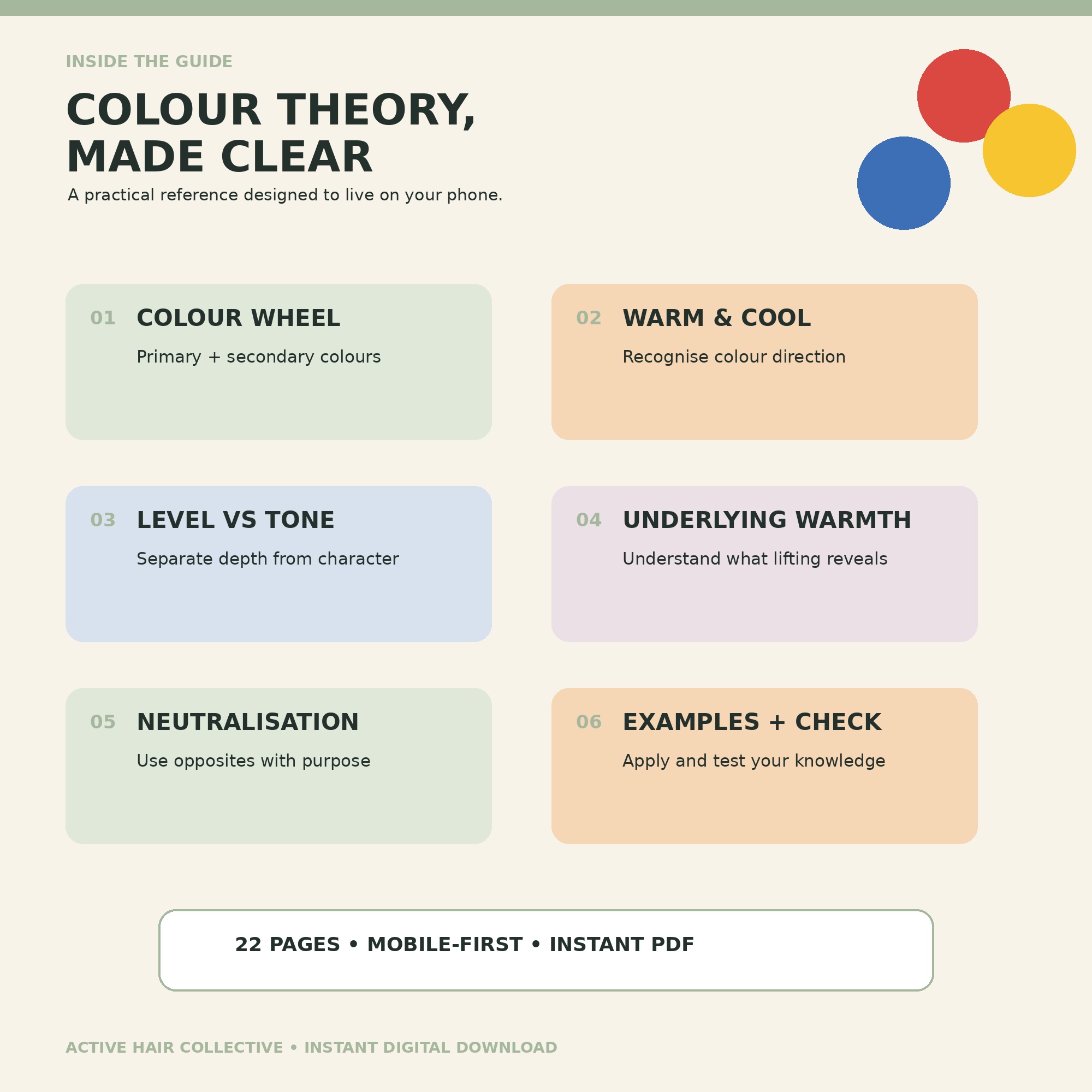
The Active Hair Collective Pocket Colour Guide brings underlying warmth, level versus tone, neutralisation pairs and a pocket cheat sheet together in one phone-friendly PDF.
Educational note: This article is for learning and revision. It does not replace professional training, strand testing, allergy alert testing, salon procedures or manufacturer instructions.