
Level and tone are closely connected, but they describe different things. Learning to separate them is one of the simplest ways to make hair-colour theory clearer.
What is hair level?
Level describes how light or dark the hair is. Professional colour systems usually organise levels along a numbered scale, although the exact numbering and names can vary between manufacturers.
When you assess level, you are judging depth. Is the hair very dark, medium, light or very light? This tells you where the hair currently sits and helps you judge whether the target depth is realistic.
What is tone?
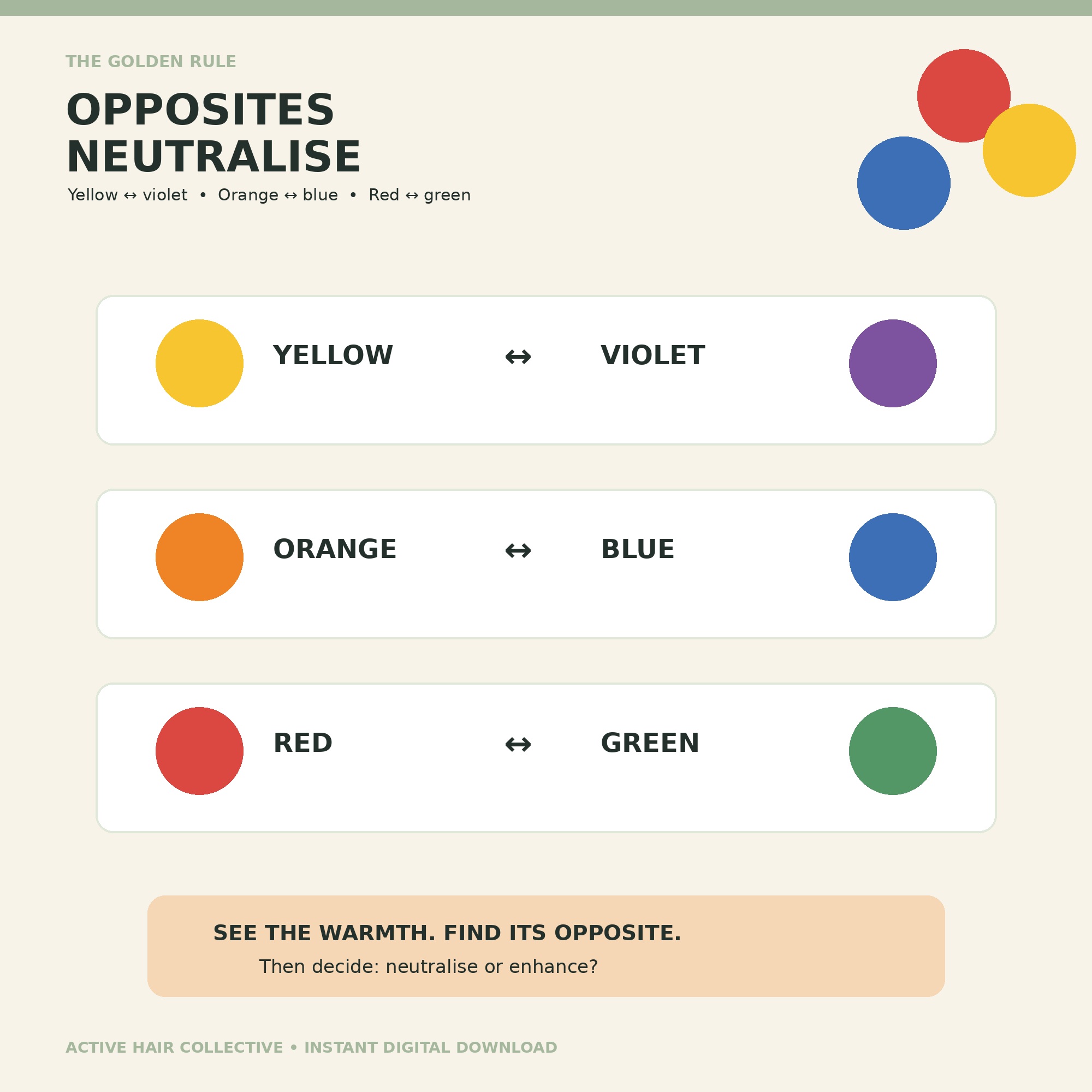
Tone describes the colour character you can see, such as gold, copper, red, violet, blue or green. Two heads of hair can sit at a similar level while showing very different tones.
Tone also affects whether a result feels warm, neutral or cool. Naming the visible tone accurately gives you a stronger basis for deciding whether to neutralise it, enhance it or leave it alone.
Why the difference matters
If you focus only on tone and ignore level, you may choose a direction that cannot create the intended result at the current depth. If you focus only on level, you may miss the exposed warmth that needs to be considered.
A useful diagnosis separates the questions:
- How light or dark is the hair?
- What colour character can I see?
- What level and tone does the client want?
- What has already been done to the hair?
Practise with everyday observations
When looking at swatches, mannequin heads or case studies, say the level first and the tone second. This repeated habit makes the two concepts easier to recall under salon pressure.



Keep a visual reference nearby
The Pocket Colour Guide includes dedicated level-versus-tone pages, a simple level scale, underlying warmth reminders and colour-wheel references in a mobile-first format.
Educational note: Numbering systems, tone codes and product performance vary. Always follow the training and technical instructions for the professional colour range you use.